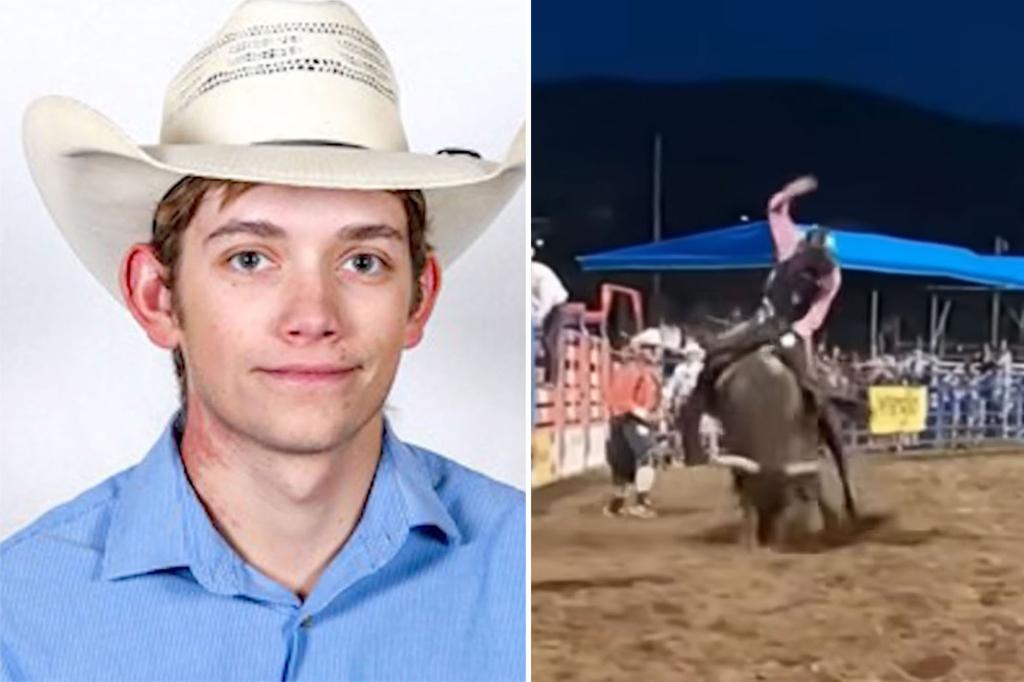
Tragedy Strikes Texas Rodeo: Rising Bull Riding Star Killed in Accident
In a heartbreaking turn of events, 22-year-old bull riding prodigy Jake “Buck” Reynolds died during a championship event at the Fort Worth Rodeo Arena on Saturday night. The promising athlete, ranked third in this season’s Professional Bull Riders (PBR) standings, was thrown from a 1,800-pound bull named “Iron Havoc” and trampled before medical teams could intervene. The incident has reignited debates about safety protocols in one of America’s most dangerous sports.
A Career Cut Short: The Incident Details
Witnesses reported Reynolds had maintained an impressive 7.2-second ride before the bull suddenly twisted mid-buck, launching the rider headfirst into the arena’s metal gate. Despite wearing a certified helmet and protective vest—requirements implemented in 2019—Reynolds sustained fatal thoracic injuries. Emergency responders reached him within 45 seconds, but trauma surgeons at John Peter Smith Hospital pronounced him dead upon arrival.
“Jake had that rare combination of raw talent and work ethic that comes along maybe once a decade,” said PBR Commissioner Sean Gleason in an official statement. “We’ve lost not just an exceptional athlete, but a young man who embodied the spirit of rodeo.”
The Safety Debate in Bull Riding
While rodeo fatalities remain statistically rare (approximately 1 per 1,000 participants annually according to Western Sports Foundation data), the sport carries inherent risks:
- Bulls can generate up to 12 Gs of force during bucking
- Riders experience impacts comparable to car crashes at 35 mph
- Despite safety gear, 73% of professional bull riders sustain serious injuries during their careers
Dr. Tandy Freeman, orthopedic surgeon for the PBR, noted: “We’ve made tremendous advances in protective equipment, but when a 2,000-pound animal decides to spin unpredictably, physics sometimes wins. The next frontier needs to be arena design—softer surfaces, better barrier technology.”
Community Reactions and Mourning
The rodeo world has united in grief, with #RideForBuck trending across social media platforms. Reynolds’ home town of Abilene, Texas, plans a memorial service at the Taylor County Expo Center, where he won his first junior championship at age 14.
Fellow rider Chase Outlaw shared: “Buck was the guy who’d drive six hours to help you fix your rig if it broke down. This isn’t just about losing a competitor—we lost family.” Meanwhile, animal rights group PETA has called for a boycott of rodeo events, labeling them “archaic bloodsport.”
Regulatory Changes on the Horizon?
The PBR has announced an immediate review of safety protocols, with key considerations including:
- Implementation of inflatable bullfighting mats around the arena perimeter
- Mandatory concussion baseline testing for all riders
- Increased medical personnel requirements for sanctioned events
Rodeo historian Dr. Sylvia Mahoney cautions against overregulation: “This is an extreme sport by nature. Participants understand the risks, just like boxers or mountain climbers. The goal should be mitigating unnecessary danger without sanitizing the essence of the competition.”
The Human Cost Behind the Spectacle
Reynolds’ death marks the first PBR fatality since 2015, when veteran rider Mason Lowe suffered similar injuries. While crowd sizes and sponsorship deals have grown exponentially—the PBR’s media rights were valued at $100 million in 2022—many argue the human element gets overshadowed by the spectacle.
“These aren’t disposable gladiators,” emphasized sports psychologist Dr. Rebecca Wallace. “We’re talking about young men from rural communities where rodeo represents both cultural heritage and economic opportunity. When tragedies occur, the impact reverberates through entire regions.”
Looking Forward: Honor and Reform
The PBR has established the Jake Reynolds Memorial Fund to support aspiring riders from underprivileged backgrounds. Meanwhile, Reynolds’ family has requested donations to the Justin Cowboy Crisis Fund, which assists injured rodeo athletes, in lieu of flowers.
As investigations continue and tributes pour in, the rodeo community faces difficult questions about how to preserve tradition while prioritizing safety. For now, the chutes at Fort Worth remain closed, draped in black bunting—a silent testament to a life ended too soon in the arena dirt.
For those wishing to support rodeo safety initiatives, visit the Western Sports Foundation’s research donation portal to contribute to ongoing protective gear development programs.
See more Highlights Daily


