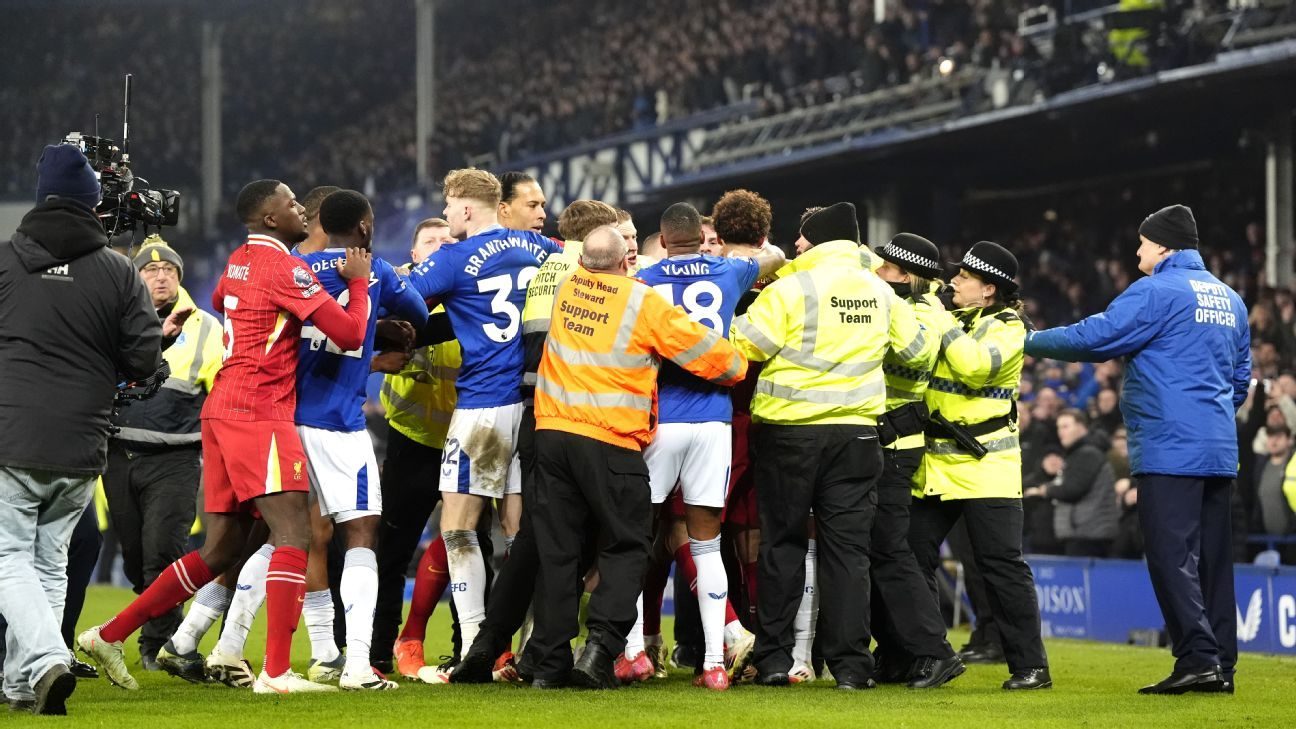
Chaos in Merseyside: The Post-Match Brawl Between Everton and Liverpool
In a stunning turn of events, the heated rivalry between Everton and Liverpool erupted into chaos, culminating in a dramatic post-match brawl that left players and fans alike in shock. This incident, which saw four red cards issued, serves not only as a testament to the fierce passion that characterizes football in Merseyside but also raises critical questions regarding sportsmanship and player conduct. As the dust settles on this turbulent encounter, it’s essential to analyze the factors leading up to the brawl, its implications for both clubs, and the broader conversation surrounding football etiquette.
The Build-Up to the Chaos in Merseyside
The Merseyside derby is renowned for its intensity and unpredictable nature. Fans of both Everton and Liverpool harbor deep-rooted rivalries that span generations, making each match a high-stakes affair. In recent years, the competitive edge has sharpened, fueled by both teams’ ambitions to secure their places in European competitions. This latest clash was no exception, with both sides showing up with a determination to claim local bragging rights.
Leading up to the match, tensions were palpable. Social media platforms were abuzz with predictions, taunts, and the usual banter that accompanies such a significant fixture. The stakes were raised even higher by the fact that both teams were vying for crucial points in the league table. As kickoff approached, the atmosphere in the stadium was electric, with fans roaring in support of their teams.
An Intense Match Unfolds
The match itself was hard-fought, showcasing the athleticism and skill of both teams. However, as the game progressed, so did the physicality. The referee, tasked with maintaining control, issued several yellow cards as a warning to players who were pushing the boundaries of fair play. Yet, as the final whistle approached, the tension boiled over. A controversial decision by the referee ignited tempers on the pitch, leading to confrontations between players.
In the aftermath, the situation escalated dramatically. Players from both sides engaged in heated exchanges, and soon, a full-scale brawl broke out. The chaos that ensued was shocking, with players pushing, shoving, and even throwing punches. The spectacle of professional athletes, who are expected to exemplify discipline and fair play, devolving into a melee was both alarming and disappointing to fans and pundits alike.
The Fallout: Red Cards and Repercussions
As order was eventually restored, the match officials took decisive action. Four players received red cards, a rare occurrence in any football match, particularly in a high-profile derby. The implications of these red cards extend beyond the immediate match; suspensions and fines could significantly impact the teams’ performance in upcoming fixtures.
- Player Suspensions: Each red card typically results in a minimum one-match ban, meaning key players will miss vital games. This could alter the course of the league for both Everton and Liverpool.
- Fines: Clubs may face financial penalties for their players’ conduct, a consequence that adds another layer of complexity to the situation.
- Reputation Damage: Both teams risk tarnishing their reputations for sportsmanship, an essential component of football that attracts fans globally.
Analyzing the Implications for Sportsmanship
The post-match brawl raises significant questions about the state of sportsmanship in football. While the passion and intensity of the sport are undeniable, this incident serves as a stark reminder of the thin line between competitiveness and chaos. The expectations placed on professional athletes to act as role models are paramount, and incidents like this can have lasting repercussions.
Moreover, the culture of football fandom plays a crucial role in shaping player behavior. The fervent support from fans can sometimes translate into undue pressure on players to perform at all costs, pushing them to cross lines they should never approach. This vicious cycle of expectation and aggression begs for introspection from both fans and players alike.
Moving Forward: The Need for Dialogue and Education
In the wake of this chaotic episode, there is a pressing need for open dialogue about player conduct and sportsmanship. Clubs, leagues, and governing bodies must take a proactive approach to address the issues that contributed to the brawl. Here are a few steps that can be taken:
- Educational Programs: Implementing programs focused on sportsmanship and conflict resolution could help players understand the importance of maintaining composure on the pitch.
- Fan Engagement: Encouraging fans to promote positive behavior and respect for opposing players can create a healthier atmosphere in stadiums.
- Clearer Regulations: Establishing stricter guidelines regarding player conduct and the consequences of failing to adhere to these standards could deter future incidents.
Conclusion: A Call for Reflection
The chaos in Merseyside serves as a critical juncture for both Everton and Liverpool, and indeed for football as a whole. While the passion evident in the brawl is a testament to the love of the game, it also underscores the need for reflection on what it means to compete with integrity. As both clubs and their supporters move forward, the emphasis should be on fostering an environment where passion for the sport does not compromise the values it stands for. It is essential to learn from this incident, ensuring that future derbies remain thrilling yet respectful, ultimately celebrating the spirit of football.
In the end, football should be a source of joy and unity, not chaos and conflict. By addressing the underlying issues and fostering a culture of respect, the beautiful game can continue to thrive, both on and off the pitch.
See more Highlights Daily


